
Islamabad Lockdown Leaves Residents Stranded Ahead of Talks
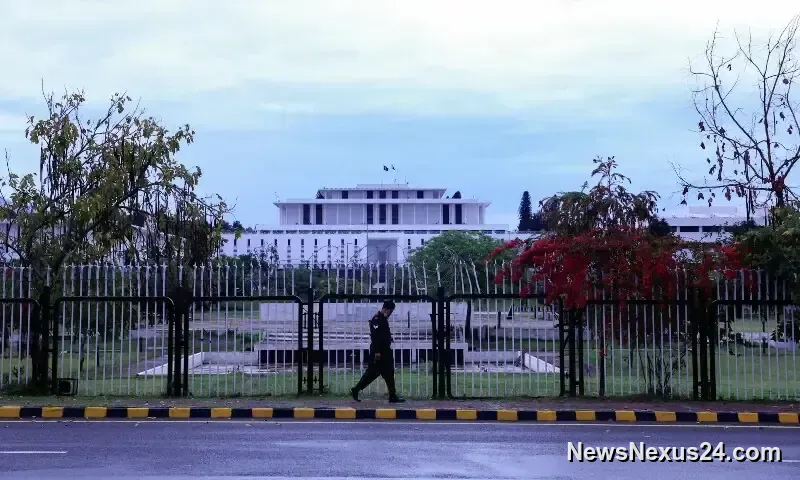
“Heavy security ahead of US-Iran talks in Islamabad left parts of Rawalpindi and the capital cut off, forcing commuters to walk and residents to scramble for water, food and medicines.”
Key points
- Heavy security ahead of US-Iran talks in Islamabad left parts of Rawalpindi and the capital cut off, forcing commuters to walk and residents to scramble for water, food and medicines.
- Police said thousands of personnel and hundreds of special pickets were deployed as roads, transport services and some markets faced restrictions.
Large parts of Rawalpindi and Islamabad were effectively locked down on Friday as Pakistani authorities enforced exceptional security measures ahead of high-stakes talks between the United States and Iran in the federal capital. The restrictions, centered on roads leading to Nur Khan Airbase and key routes into Islamabad, left many residents unable to move freely, disrupted public transport and commerce, and turned what was meant to be a diplomatic security operation into a deeply felt civic crisis for ordinary people.
The local administration sealed Old Airport Road and adjoining approaches using containers and barbed wire, while several nearby neighborhoods were cut off for extended periods. Areas including Shah Khalid Colony, Gulzar-e-Quaid, Airport Housing Society, Mangtal Town and Faisal Colony were among those most heavily affected. Residents said the closures were so extensive that even internal service roads and connecting streets were blocked, leaving families effectively confined to their homes.
The transport fallout spread quickly across the twin cities. Commuters using electric green buses were reportedly dropped at Tipu Road rather than being taken to their usual stops near Old Airport and Koral Chowk, forcing many passengers, including women and children, to continue on foot. Heavy congestion was also reported on Murree Road, Committee Chowk, Marrir Chowk, Saddar and Fawwara Chowk as traffic was diverted away from sealed corridors. The disruption extended beyond inconvenience, creating immediate pressure on daily wage earners, students and patients trying to reach schools, markets and medical facilities.
Residents described the operation as abrupt and poorly communicated. Some said there had been no practical warning that would have allowed families to store food or arrange water supplies before the closures took effect. One resident told the newspaper that a booked water tanker refused to enter the locality because of blocked roads, forcing the family to pay extra for a smaller delivery routed through narrow streets. Others complained of dwindling groceries, limited access to medicines and rising prices in small neighborhood shops, prompting calls for alternative access routes and mobile health support in sealed localities.
The security plan also hit business activity in important commercial pockets. Traders in Saddar, Old Airport Road and adjoining areas were asked to keep outlets shut on Friday and Saturday, though market representatives said other city bazaars such as those on Murree Road and Raja Bazaar would remain open. Public transport restrictions were widened as well: the Metro Bus Service between Rawalpindi and Islamabad was to be curtailed from Saddar to the Pakistan Institute of Medical Sciences, while the electric bus route from Raja Bazaar to Old Airport was suspended for three days, from Thursday through Saturday.
Police said the scale of the deployment reflected the sensitivity of the diplomatic event Islamabad is preparing to host. A Rawalpindi police spokesman said the city had been placed on high alert on the orders of the city police officer, with more than 350 special pickets established and extra personnel posted on major roads. More than 5,000 police officers and staff were assigned to security duties, backed by Elite Force teams, Dolphin Force units, police mobiles and quick-response patrols. Bus terminals were temporarily closed, suspect monitoring was intensified and Safe City surveillance was being used around the clock from the control room.
The broader backdrop is Pakistan’s effort to host and protect foreign delegations linked to negotiations intended to preserve a fragile ceasefire between Washington and Tehran. That larger diplomatic role has elevated Islamabad’s international profile, but it has also brought the costs of high-security statecraft directly into nearby neighborhoods. The same road closures and layered security protocols that officials consider necessary for visiting dignitaries have translated into lost workdays, interrupted schooling, delayed transport and reduced access to basic services for local residents.
For Pakistan, the immediate significance of Friday’s developments goes beyond traffic management. The episode illustrates the tension between projecting the country as a credible diplomatic venue and maintaining public convenience in densely populated urban zones connected to sensitive state infrastructure. When entire areas are sealed with little notice, public frustration can rise quickly, particularly in cities already dealing with inflation, transport strain and fragile household budgets. That makes administrative communication and relief planning almost as important as the security operation itself.
The coming days will show whether authorities can ease the burden on residents while keeping the capital secure for the expected talks. If alternative routes, transport adjustments and market access improve, the disruption may be remembered as a temporary cost of a major diplomatic moment. But if restrictions continue to leave people cut off from work, water, food and medicine, the Islamabad security lockdown is likely to become one of the most talked-about domestic consequences of Pakistan’s latest attempt to shape regional diplomacy.
Corrections & clarifications
Spot an inaccuracy or need more detail? Email connect@newsnexus24.com. Significant updates are timestamped above.


