
Heavy Rain Floods Low-Lying Parts of Rawalpindi, Disrupts Daily Life
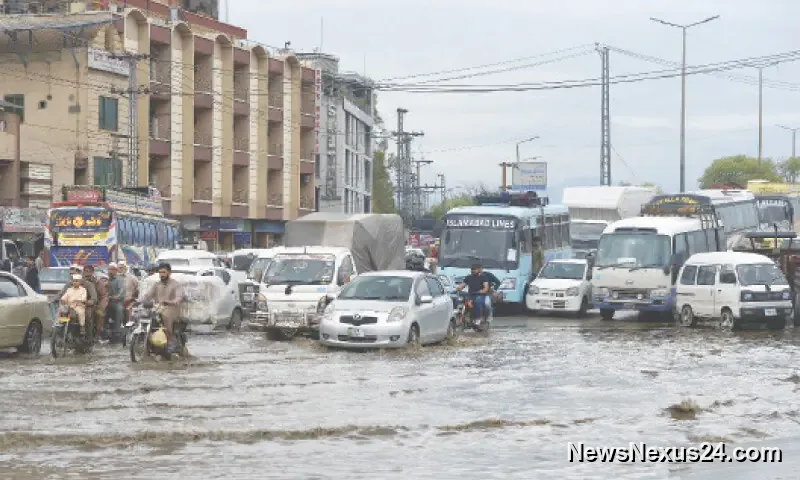
“Heavy rain hit Rawalpindi, flooding low-lying areas and disrupting traffic and daily activity across the city.”
Key points
- Heavy rain hit Rawalpindi, flooding low-lying areas and disrupting traffic and daily activity across the city.
- The episode has renewed concern over weak drainage infrastructure and the city’s recurring vulnerability to urban flooding.
Heavy rainfall disrupted daily life in Rawalpindi and nearby areas on Saturday, inundating low-lying neighbourhoods, slowing traffic and exposing familiar weaknesses in urban drainage. The spell affected commuters early in the day as water accumulated on key roads and intersections, turning routine movement into a difficult and time-consuming exercise.
The downpour left several streets partially submerged, while vehicles moved cautiously through standing water in busy sections of the city. In areas where drainage channels either overflowed or failed to clear runoff quickly, pedestrians and motorcyclists faced the greatest difficulty. The impact was especially visible in places where even moderate rainfall has historically translated into road blockages and local flooding.
For residents, the disruption was immediate. Travel times increased, commercial activity slowed and mobility across affected roads became uneven. Weather-related congestion in the Rawalpindi-Islamabad urban belt often has consequences beyond inconvenience, delaying workers, students, deliveries and emergency access while also increasing the risk of road accidents and breakdowns.
Although such episodes are common during intense weather spells, they also reignite criticism of municipal preparedness. Recurrent flooding in low-lying pockets suggests that seasonal response measures and long-term drainage upgrades still lag behind the scale of urban expansion. The city’s built environment has grown faster than its stormwater management capacity, leaving many areas vulnerable whenever rainfall intensifies.
The broader concern is not limited to one day’s traffic misery. Repeated urban flooding can damage roads, erode public confidence in city management and create health hazards when stagnant water lingers. Poor drainage also raises the likelihood of contamination, mosquito breeding and damage to nearby homes and businesses, particularly in densely populated localities.
Rawalpindi has faced similar episodes before, especially during the monsoon season, when nullahs and stormwater channels come under pressure. Even outside peak monsoon months, however, strong pre-season rain can reveal the same structural problems: blocked drains, inadequate pumping, encroachments and weak emergency coordination.
Saturday’s rainfall therefore served as another reminder that urban resilience is now a year-round governance issue rather than a seasonal one. With weather patterns becoming less predictable, city administrations are under pressure to improve not just emergency response but also preventive maintenance, drainage redesign and public warning systems.
The effects are likely to be felt most by lower-income residents and small traders, who often operate in the most flood-prone zones and have the least capacity to absorb repeated weather-related losses. For them, each spell of heavy rain can mean disrupted income, transport costs, damaged goods and heightened exposure to unsafe conditions.
In the coming days, attention will be on whether local authorities move beyond temporary water clearance and undertake more durable mitigation measures. Unless drainage bottlenecks, encroachments and road-level flooding points are addressed systematically, Rawalpindi is likely to face the same disruption again with the next strong rain system.
Corrections & clarifications
Spot an inaccuracy or need more detail? Email connect@newsnexus24.com. Significant updates are timestamped above.


