
Bannu suicide attack kills five civilians as security sweep expands
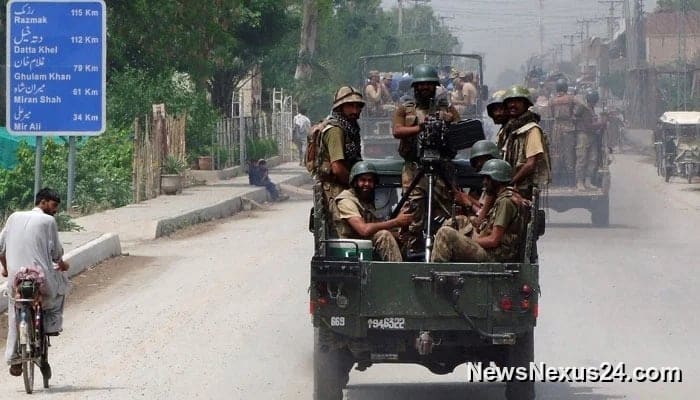
“A suicide attack near the Domail police station in Bannu killed five civilians, including women and a child, and injured several others.”
Key points
- A suicide attack near the Domail police station in Bannu killed five civilians, including women and a child, and injured several others.
- The bombing came amid intensified counterterrorism activity in KP, renewing concern over the province’s fragile security environment and the continued threat to civilians.
A suicide attack in Bannu has once again pushed Khyber Pakhtunkhwa’s security crisis into the national spotlight, after at least five civilians, including three women and a child, were killed near a police facility in the district. The blast, which officials said took place during an attempted strike on the Domail police station, also left several people injured and triggered an emergency response from rescue and security teams.
According to security sources, the bomber targeted an area where civilians were present outside the station, turning what appeared to be an assault on a state installation into a devastating strike on ordinary people. The injured were moved to nearby hospitals, while teams were dispatched to clear debris, assist victims and begin a search of the surrounding area. The immediate response focused on both relief and containment, reflecting fears that such incidents can be followed by secondary threats or broader militant activity.
The attack did not happen in isolation. It came against the backdrop of a fresh sequence of counterterrorism operations in the province, with officials saying dozens of militants had been killed in recent days in different parts of KP. The military’s media wing has also pointed to operations in Khyber, Bannu and North Waziristan, presenting them as part of an intensified campaign against militant networks operating in border and tribal districts.
Security officials described the attackers as militants linked to the broader insurgent threat facing the province and said clearance and search operations were continuing after the blast. The official line stressed that rescue work and security checks were being carried out simultaneously, a sign that authorities remained worried about the wider environment in which the bombing occurred. As in many previous attacks, the first hours were shaped by a mix of casualty management, intelligence gathering and efforts to reassure a frightened public.
The human cost of the bombing is likely to resonate widely because the victims included women and a child, underscoring how militant violence often reaches beyond its intended target. In places like Bannu, police stations and security posts are not isolated compounds but part of a daily civilian landscape. When militants strike such locations, they frequently endanger bystanders, nearby homes and routine public life, deepening the sense of vulnerability in already tense districts.
Khyber Pakhtunkhwa has lived with recurring militant violence for years, but the challenge has sharpened again since the Taliban returned to power in Afghanistan in 2021. Pakistani officials have repeatedly warned that militant groups have used the regional flux to regroup, reorganise and intensify attacks, especially in KP and Balochistan. The result has been a grinding security burden that affects not only the state but also schools, markets, transport routes and families living close to conflict-prone zones.
The broader debate in Pakistan is no longer only about how to respond to individual attacks, but about whether the current counterterrorism posture is sufficient to reverse the trend. Security operations can disrupt networks and eliminate fighters, yet attacks like the one in Bannu show how difficult it remains to fully prevent high-impact incidents. The persistence of such violence also fuels political and public questions about border control, intelligence coordination and the long-term strategy for stabilising vulnerable districts.
For the people of Bannu, the immediate concern is more basic: safety, medical care for the injured and reassurance that public spaces will not remain exposed. Fear spreads quickly after attacks that hit civilians, especially when they occur close to police infrastructure that is supposed to symbolize protection. That makes the state’s response important not only in military terms, but also in how visibly it restores confidence among residents.
The coming days are likely to bring further operations, arrests or intelligence-led follow-up, but the larger issue will remain unresolved unless the province sees a sustained drop in militant capability. Each new attack reinforces the sense that KP remains on the front line of Pakistan’s internal security struggle. Bannu’s latest tragedy is therefore both a local loss and a stark reminder that militancy continues to demand national attention, resources and strategic clarity.
Corrections & clarifications
Spot an inaccuracy or need more detail? Email connect@newsnexus24.com. Significant updates are timestamped above.


