
Lakki Marwat IED blast injures five policemen in fresh KP attack
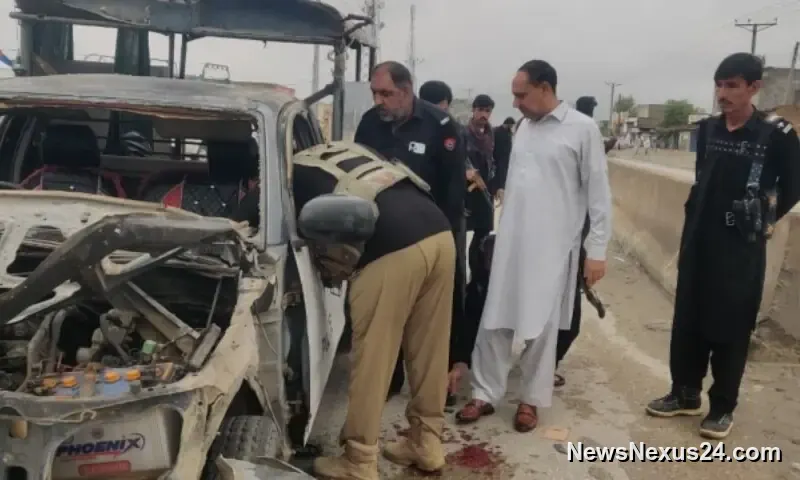
“Five policemen were injured after an IED fixed to a roadside motorcycle exploded near a police patrol in Lakki Marwat.”
Key points
- Five policemen were injured after an IED fixed to a roadside motorcycle exploded near a police patrol in Lakki Marwat.
- The attack has renewed concern over rising militant violence in Khyber Pakhtunkhwa, where police units remain frequent targets.
A roadside bomb attack in Khyber Pakhtunkhwa’s Lakki Marwat district left five policemen injured on Tuesday, underscoring the persistent security threat facing law enforcement in southern parts of the province. The blast struck a police patrol in Shahbazkhel town along the Bannu-Dera Ismail Khan stretch of the Indus Highway, an area that has repeatedly figured in militant violence over recent months.
According to local police, the explosive device had been attached to a motorcycle parked beside the road and detonated as the patrol vehicle passed the spot. The force of the explosion damaged the police van and spread panic through the surrounding area, with the sound of the blast reportedly heard across the locality. Authorities said the patrol from Shahbazkhel police station had been the intended target.
The injured included one assistant sub-inspector and four constables. Police officials said the wounded officers were shifted to the District Headquarters Hospital for treatment soon after the attack. While no deaths were reported in this incident, the bombing once again highlighted the risks faced by frontline policing units conducting routine patrols in districts that remain vulnerable to insurgent activity.
A spokesperson for the district police said the attack was blamed on militants referred to by the state as Fitna al Khawarij, a term used for members of the banned Tehreek-i-Taliban Pakistan. The official said a large police contingent was dispatched to the area immediately after the explosion, cordoning off the location and launching a search operation to trace those behind the bombing. The response indicated that authorities were treating the strike not as an isolated act, but as part of a wider militant challenge.
The latest attack fits into a broader pattern of violence in Khyber Pakhtunkhwa, where districts such as Bannu, Peshawar, Karak, Lakki Marwat and Bajaur have all seen repeated assaults on police and security personnel. These incidents have ranged from targeted shootings to improvised explosive device attacks, adding pressure on already stretched local policing networks. For many officers posted in southern KP, patrol duty has become one of the most dangerous assignments in day-to-day law enforcement.
The security backdrop has grown more troubling over the past year. Research and Security Studies’ Annual Security Report 2025, which said fatalities in Khyber Pakhtunkhwa rose sharply from 1,620 in 2024 to 2,331 in 2025. That increase reflects not just the frequency of attacks but also the widening operational space militants have tried to reclaim in sensitive districts. The numbers have intensified debate over whether current counterterrorism and policing arrangements are enough to contain the threat.
Lakki Marwat, located near key connecting routes in southern KP, has long held strategic significance because of its position between troubled districts and major transport links. That makes road patrols especially important, but also highly exposed. Bombings targeting police mobility can disrupt routine enforcement, weaken morale and create fear among both officers and civilians who depend on secure roads for travel and trade.
The impact of such attacks reaches beyond the immediate casualties. Every strike on a patrol unit raises concern about public safety, intelligence coordination and the ability of district administrations to prevent repeat incidents. It also places renewed focus on the need for better protective equipment, route surveillance and pre-emptive intelligence to shield officers operating in volatile areas. In provinces already dealing with economic strain and political pressures, renewed insecurity can further complicate governance.
For now, the immediate priority remains the treatment of the injured policemen and the manhunt for those responsible. Investigators are expected to piece together how the explosives were planted and whether the attackers had support networks in the area. The coming days will show whether the latest bombing triggers stronger preventive measures in Lakki Marwat and neighbouring districts, or whether it becomes another warning in KP’s continuing struggle against militant violence.
Corrections & clarifications
Spot an inaccuracy or need more detail? Email connect@newsnexus24.com. Significant updates are timestamped above.


