
Pakistan Orders LPG Crackdown to Stop Overpricing Nationwide
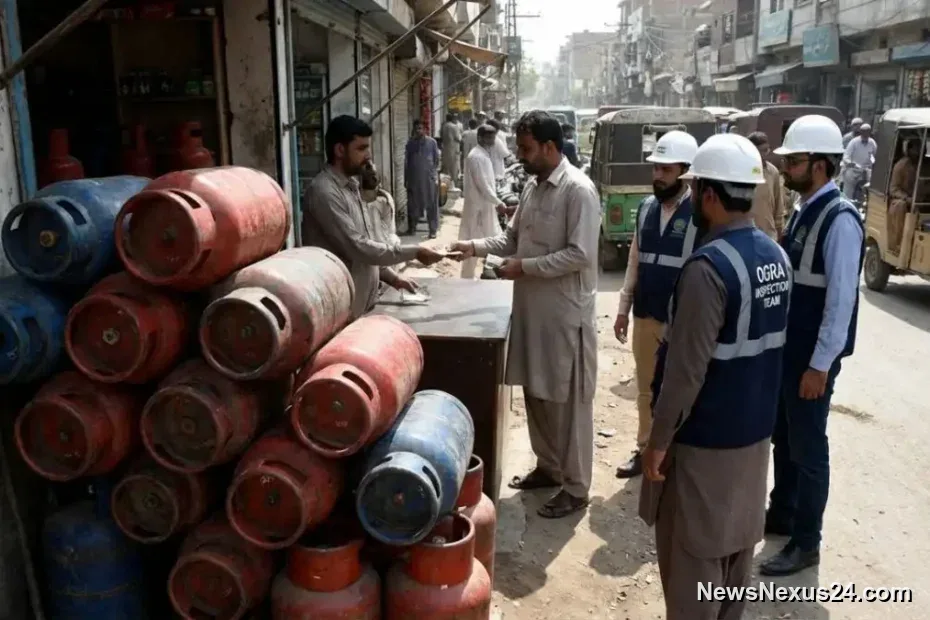
“Pakistan has launched a nationwide crackdown on LPG overpricing, directing OGRA and FIA teams to enforce official April rates and take action against violators.”
Key points
- Pakistan has launched a nationwide crackdown on LPG overpricing, directing OGRA and FIA teams to enforce official April rates and take action against violators.
- The move aims to improve supply transparency, protect consumers and curb profiteering in a fuel market already under pressure.
Pakistan’s government on Friday ordered a nationwide crackdown to ensure liquefied petroleum gas is sold at officially notified rates, escalating its response to mounting complaints of overcharging and supply-side abuse in the domestic fuel market. The move was issued under the prime minister’s directive and immediately placed LPG distributors and marketers under closer regulatory scrutiny as authorities tried to stabilize prices for consumers.
At the center of the action is the Oil and Gas Regulatory Authority, which has sent notices to all LPG marketing companies and made it compulsory for every delivery vehicle to carry invoices. Companies have also been told that prices must be clearly stated on gate passes, a step intended to improve transparency from the supply point onward. By tightening documentation requirements, the government is trying to reduce the room for hidden price manipulation between storage, transport and retail sale.
Officials warned that companies failing to mention prices on gate passes could face serious consequences, including cancellation of licences. The government has paired that warning with field enforcement, saying compliance will no longer be monitored only through paperwork or routine supervision. Instead, regulators are moving to direct inspections and punitive action where violations are detected, signaling a sharper and more public phase of enforcement.
To carry out the campaign, OGRA is working with the Federal Investigation Agency, which has helped deploy joint enforcement teams across the country. Those teams have been tasked with checking whether LPG is being sold at the rates notified for April 2026 and whether companies are following the new invoicing and pricing requirements. Their powers are substantial: authorities said they may impose fines ranging from Rs1 million to Rs10 million and seal plants found violating government directives.
The official explanation for the crackdown is straightforward. Authorities say the goal is to make sure LPG remains available to consumers at government-fixed prices, especially in areas where complaints of overpricing have persisted. That reflects a recurring concern in Pakistan’s energy market, where official rates may exist on paper but consumers often report paying more because of weak enforcement, transport markups or opportunistic pricing during periods of uncertainty.
The decision also matters because LPG is not a marginal fuel for many households and businesses. In numerous areas, especially where piped gas coverage is limited or unreliable, families and small commercial users depend on cylinders for cooking and basic daily use. When retail prices move far above official levels, the impact is felt immediately in kitchen costs, small food businesses and household budgets that are already under pressure from broader inflation.
Friday’s action suggests the government believes the problem is not only one of market shortage but also of compliance and pricing discipline. By insisting on declared prices, documented deliveries and coordinated enforcement, authorities appear to be targeting the points where formal regulation often breaks down in practice. The involvement of the FIA further indicates that the state wants to treat serious violations as more than routine regulatory breaches, particularly if profiteering is suspected.
The crackdown also arrives in a wider climate of anxiety around fuel affordability in Pakistan. Even when petroleum and gas policy shifts are announced at the national level, public trust depends heavily on what consumers actually pay on the ground. A gap between notified rates and street-level pricing can quickly deepen frustration, especially in a market where rumors of shortage or disruption tend to drive panic buying and opportunistic resale.
For the government, the immediate challenge will be proving that the order leads to visible relief rather than another short-lived enforcement campaign. That will depend on how consistently inspections are carried out, whether violators are penalized quickly and whether supply remains steady while pricing rules are enforced. If the crackdown succeeds, it could restore some confidence in the state’s ability to control abusive pricing in the LPG sector. If it fails, complaints about profiteering and weak enforcement are likely to intensify, keeping fuel regulation at the center of Pakistan’s economic debate.
Corrections & clarifications
Spot an inaccuracy or need more detail? Email connect@newsnexus24.com. Significant updates are timestamped above.


