
Islamabad Tightens Security Before Landmark US-Iran Peace Talks
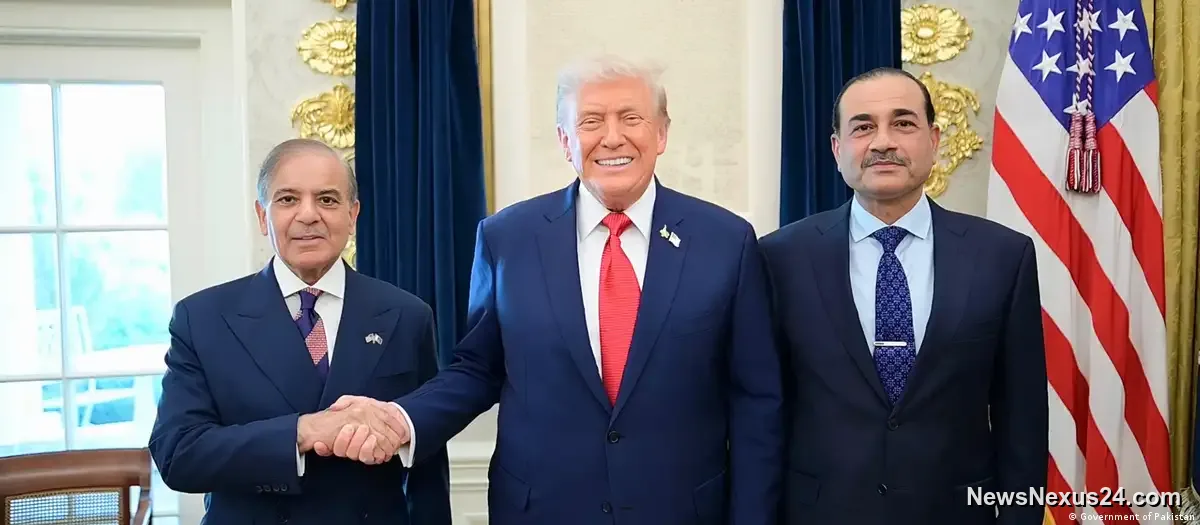
“Islamabad has imposed exceptional security and traffic measures ahead of high-level US-Iran talks, making the diplomatic build-up one of Pakistan’s biggest breaking stories today.”
Key points
- Islamabad has imposed exceptional security and traffic measures ahead of high-level US-Iran talks, making the diplomatic build-up one of Pakistan’s biggest breaking stories today.
- The meetings could boost Pakistan’s international role, but they are already disrupting daily life in the capital and raising the stakes for the government’s peace efforts.
Islamabad moved into high alert on Thursday as Pakistani authorities rolled out extraordinary security arrangements ahead of high-level talks between the United States and Iran, a meeting that could place the capital at the centre of one of the most sensitive diplomatic efforts in the region this year. The development quickly became one of the day’s most discussed stories in Pakistan because it combines foreign policy prestige, visible disruption in daily life and the possibility of a major geopolitical breakthrough.
The security build-up followed a meeting between Interior Minister Mohsin Naqvi and US Ambassador Natalie Baker, where both sides reviewed the regional situation and the preparations for the talks scheduled to begin in Islamabad on Friday. Officials presented the engagement as part of a broader attempt to preserve a fragile truce and create space for direct diplomacy after weeks of dangerous escalation in the Middle East.
Authorities have not treated the event as a routine diplomatic visit. A citywide traffic and movement plan was activated, with diversions on major arteries, a ban on heavy vehicles entering Islamabad for two days and strict route management for convoys linked to the foreign delegations. Residents travelling between Islamabad and Rawalpindi were told to expect delays and use alternate corridors, underlining how deeply the talks are already affecting everyday movement in and around the federal capital.
The official response has extended beyond road control. Examinations at selected government school centres around the Red Zone were postponed, a step that signalled the seriousness with which the administration is viewing the security environment. Traffic police were deployed in larger numbers to guide commuters, while the government framed the measures as necessary to guarantee full protection for visiting dignitaries and maintain order during a high-stakes diplomatic moment.
During the meeting with the US envoy, Naqvi said Pakistan had prepared a comprehensive security plan for all foreign guests. The American side, according to the report, acknowledged Islamabad’s diplomatic role and appreciated the effort Pakistan has made in helping open a channel for talks. That public recognition matters because it reinforces the government’s attempt to present Pakistan not merely as a host, but as a credible facilitator at a time when regional diplomacy has become unusually volatile.
The wider context explains why the story is drawing such strong attention. Pakistan has recently emerged as an intermediary between Washington and Tehran after helping support a temporary ceasefire. Hosting the next phase of dialogue raises the country’s profile well beyond South Asia and offers Islamabad a rare opportunity to shape the atmosphere around a potentially consequential negotiation rather than simply reacting to events unfolding elsewhere.
There is also a domestic political angle. In Pakistan, foreign policy stories become especially viral when they produce immediate public consequences such as traffic paralysis, school disruptions or heavy security cordons. This episode has all of those elements, while also feeding a broader national conversation about whether Pakistan can convert short-term diplomatic visibility into sustained strategic relevance on the world stage.
Economically and socially, stability in the Gulf and broader Middle East is not an abstract issue for Pakistan. The country’s energy security, remittance flows, inflation outlook and labour ties are all linked in some way to calm in the region. Any successful de-escalation would therefore carry practical benefits for Pakistan, while a collapse of talks could revive pressure on prices, markets and public confidence at home.
The next 24 to 48 hours will be critical. If the delegations arrive smoothly and the Islamabad meetings produce even limited forward movement, the government is likely to claim a major diplomatic success. If tensions re-emerge or talks stall, the capital’s lockdown-like precautions may instead be remembered as the opening scene of another fragile and uncertain chapter in regional politics.
Corrections & clarifications
Spot an inaccuracy or need more detail? Email connect@newsnexus24.com. Significant updates are timestamped above.


