
Petrol Falls to Rs378 After PM Cuts Levy in Relief Move
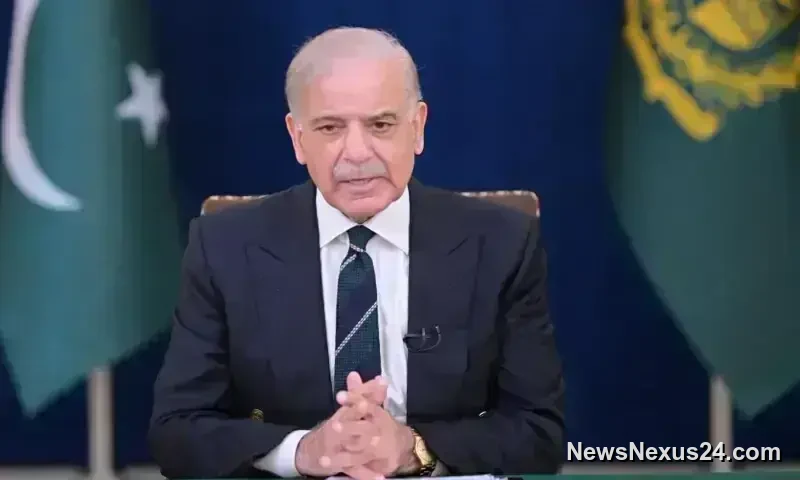
“The federal government has reduced petrol to Rs378 per litre for one month after Prime Minister Shehbaz Sharif cut the levy in response to public backlash.”
Key points
- The federal government has reduced petrol to Rs378 per litre for one month after Prime Minister Shehbaz Sharif cut the levy in response to public backlash.
- The move is part of a wider relief package aimed at limiting the inflationary fallout from the regional energy crisis.
Prime Minister Shehbaz Sharif on Saturday moved to soften the latest fuel shock by cutting the petroleum levy and bringing the petrol price down to Rs378 per litre for one month. The decision followed a strong public reaction to a steep hike announced earlier and was presented as part of a broader attempt to contain inflationary pressure linked to the regional energy crisis.
The revised rate took effect from midnight, replacing the much higher level that had triggered anger among households, transporters and businesses. The government said the relief was necessary because rising oil prices in international markets, driven by conflict in the Gulf region, were threatening to push Pakistan’s already strained cost of living even higher.
The package went beyond a pump-price adjustment. Officials announced targeted support for motorcyclists, goods transporters, freight vehicles and public transport operators, while small farmers were promised financial assistance per acre. The government also said it would prevent an increase in economy-class Pakistan Railways fares, signalling an effort to stop higher fuel costs from quickly spreading through transport and food prices.
In his public remarks, the prime minister framed the measure as emergency relief for ordinary Pakistanis coping with rapidly rising costs. He said the government wanted to reduce the immediate burden on commuters, farmers and low-income citizens rather than allow global oil turmoil to fully pass through to domestic consumers. Cabinet members were also asked to surrender six months of salaries as part of the wider austerity posture.
The policy shift shows how difficult it has become for Islamabad to balance fiscal discipline with political and social stability. Fuel pricing affects almost every part of Pakistan’s economy, from household budgets and agricultural input costs to wholesale logistics and passenger transport. Even short-lived increases can quickly fuel inflation and deepen pressure on wages, small businesses and public sentiment.
The latest decision also reflects Pakistan’s exposure to external energy shocks. As an oil-importing country, it remains vulnerable whenever geopolitical conflict disturbs supply chains, shipping routes or benchmark prices. That vulnerability becomes especially acute when inflation is already elevated and room for untargeted subsidies is limited by budget constraints and lender scrutiny.
The background to the relief package is a tense period in which fuel prices have become one of the country’s most politically sensitive issues. Earlier increases had already stirred concern among transporters and consumers, while economists warned that sustained high energy costs could ripple through food, freight and manufacturing. Saturday’s rollback was therefore as much a political reset as an economic measure.
For the public, the immediate impact is likely to be felt at fuel stations, in public transport and in freight charges over the coming days. For the government, however, the challenge is larger: cushioning citizens without undermining fiscal credibility. If global oil volatility continues, Islamabad may be forced to revisit pricing, subsidies and austerity again sooner than it would like.
The next test will be whether the one-month relief window gives policymakers enough time to reassess the regional energy situation and domestic finances. Much will depend on global crude movements, the durability of the government’s subsidy design and whether inflation can be prevented from accelerating again despite ongoing external pressure.
Corrections & clarifications
Spot an inaccuracy or need more detail? Email connect@newsnexus24.com. Significant updates are timestamped above.


