
Pakistan lifts fuel prices sharply and shifts to targeted relief
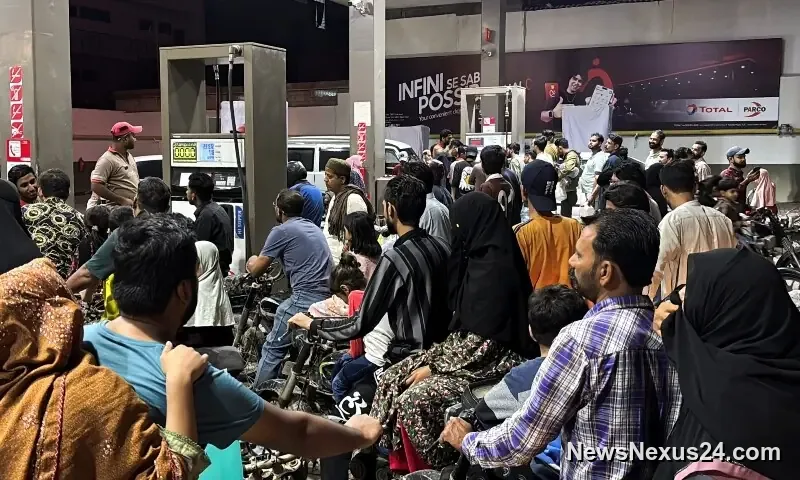
“The government has sharply raised petrol, diesel and kerosene prices after abandoning broad fuel subsidies amid global oil turmoil.”
Key points
- The government has sharply raised petrol, diesel and kerosene prices after abandoning broad fuel subsidies amid global oil turmoil.
- Islamabad is now relying on targeted support for bikers, farmers and transporters, along with energy-saving measures, to soften the blow.
Pakistan has imposed one of its sharpest fuel price increases in recent memory, raising petrol and diesel rates by extraordinary margins while scrapping broad-based subsidy support in favor of more tightly targeted assistance. The move comes as global oil markets reel from the regional war involving Iran, forcing Islamabad to confront a sudden external shock with a mix of price pass-through, conservation measures and selective relief.
Under the new rates, petrol was increased by more than Rs137 per litre to Rs458.41, while high-speed diesel rose by nearly Rs184.5 to Rs520.35. Kerosene also became substantially more expensive, climbing by a little over Rs34 to Rs457.80. The scale of the adjustment underlines how abruptly international market conditions have shifted and how limited the government’s room has become to absorb the full impact without jeopardizing fiscal stability.
Officials presented the decision as the result of high-level national consultations rather than a routine pricing review. Petroleum Minister Ali Pervaiz Malik said the government had initially tried to shield consumers through blanket subsidies, but increasingly volatile global markets made that approach unsustainable. The new strategy, he said, is to protect the most exposed groups while preserving the economic discipline Pakistan has worked to restore under international commitments.
The package therefore pairs steep increases with targeted relief. Two-wheeler users are to receive a subsidy of Rs100 per litre for up to 20 litres a month for three months. Small farmers are promised a one-time payment of Rs1,500 per acre to help them through the harvest period. Diesel-reliant inter-city and goods transport operators are also being offered support, alongside direct monthly assistance for trucks and public service vehicles, in an effort to prevent a full pass-through into transport fares and food prices.
Another key element is the redesign of the petroleum levy. According to the government’s approach, the levy on petrol has been raised sharply while the charge on diesel has been cut to zero, a decision intended to reduce the freight and logistics shock that would come from an even higher diesel price. In practical terms, Islamabad is trying to distribute the pain in a way that protects supply chains and basic consumption, even as the headline numbers remain punishing for households.
The authorities are also moving on demand management. Early market closures are being planned with the aim of saving around 1,200 megawatts of electricity during peak hours. Pakistan Railways is expected to receive assistance to keep passenger and freight services affordable, and the broader relief package will be reviewed monthly as the external situation evolves. The government has framed these measures as part of a wider effort to conserve fuel, support food security and avoid uncontrolled secondary inflation.
The challenge, however, is that fuel price shocks rarely stay confined to petrol pumps. They feed into transport costs, agriculture, electricity usage, retail pricing and inflation expectations. Even with targeted subsidies, the increase is likely to be felt across supply chains, especially by urban commuters, small businesses and rural producers who depend on fuel-intensive transport. The gap between international price movements and domestic purchasing power remains vast.
Pakistan has faced fuel crises before, but the present one is unfolding in the shadow of a broader geopolitical disruption that has already rattled trade routes and benchmark crude prices. Officials say the country has managed to keep supply lines open, yet the jump in global crude and product prices has narrowed policy choices. That explains why the government has shifted from universal protection to a more selective form of crisis management.
The weeks ahead will determine whether the relief package is enough to prevent a deeper cost-of-living backlash. If global markets stabilize, the government may be able to contain the damage through monthly reviews and targeted support. If volatility persists, Pakistan could face a longer period of inflationary pressure, tougher fiscal decisions and more difficult negotiations over how to share the burden of the next round of energy shocks.
Corrections & clarifications
Spot an inaccuracy or need more detail? Email connect@newsnexus24.com. Significant updates are timestamped above.


