
Pakistan Slams India-Canada Uranium Deal as Non-Proliferation Threat
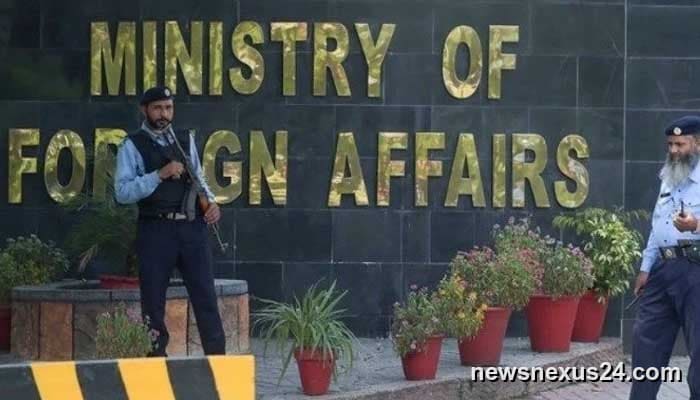
“Pakistan's Foreign Office formally protested the India-Canada C$2.6 billion uranium supply agreement, arguing it represents a selective exemption that undermines global non-proliferation norms and could enable India to expand its nuclear arsenal.”
Key points
- Pakistan's Foreign Office formally protested the India-Canada C$2.6 billion uranium supply agreement, arguing it represents a selective exemption that undermines global non-proliferation norms and could enable India to expand its nuclear arsenal.
- Islamabad called on the international community to apply non-discriminatory standards to civil nuclear cooperation for all non-NPT states.
Pakistan's Foreign Office formally raised concerns on Thursday over the recently concluded uranium supply agreement between India and Canada, warning that the deal carries significant implications for regional strategic stability and the integrity of the global nuclear non-proliferation regime.
The reaction from Islamabad followed Canadian Prime Minister Mark Carney's visit to New Delhi, during which he and Indian Prime Minister Narendra Modi announced a series of bilateral agreements. These included plans for a free trade agreement to be finalised by year-end, a bilateral trade target of $50 billion by 2030, a C$2.6 billion uranium supply deal, and cooperation on small modular reactor and advanced nuclear technology development. Modi described the uranium arrangement as a landmark deal for India's civil nuclear energy programme.
Foreign Office spokesperson Tahir Andrabi said in an official statement that Pakistan viewed the deal as yet another country-specific exception to established norms in civil nuclear cooperation. He noted the historical irony of the arrangement, pointing out that India's 1974 nuclear test was conducted using plutonium produced in a Canadian-supplied research reactor originally intended for peaceful purposes — a development that directly triggered the formation of the Nuclear Suppliers Group.
Andrabi further noted that India has not brought all of its civilian nuclear facilities under International Atomic Energy Agency safeguards, nor made any binding commitment to do so under the new agreement. He said several Indian facilities remain outside international inspection and that it was unclear what enforceable non-proliferation assurances, if any, accompany the deal.
Pakistan also warned that guaranteed external uranium supplies would free up India's domestic uranium reserves for military purposes, potentially accelerating the expansion of its nuclear arsenal and deepening South Asia's existing strategic imbalances. The FO reiterated that civil nuclear cooperation must be governed by a non-discriminatory, criteria-based framework applicable equally to all states outside the Nuclear Non-Proliferation Treaty.
Corrections & clarifications
Spot an inaccuracy or need more detail? Email connect@newsnexus24.com. Significant updates are timestamped above.


