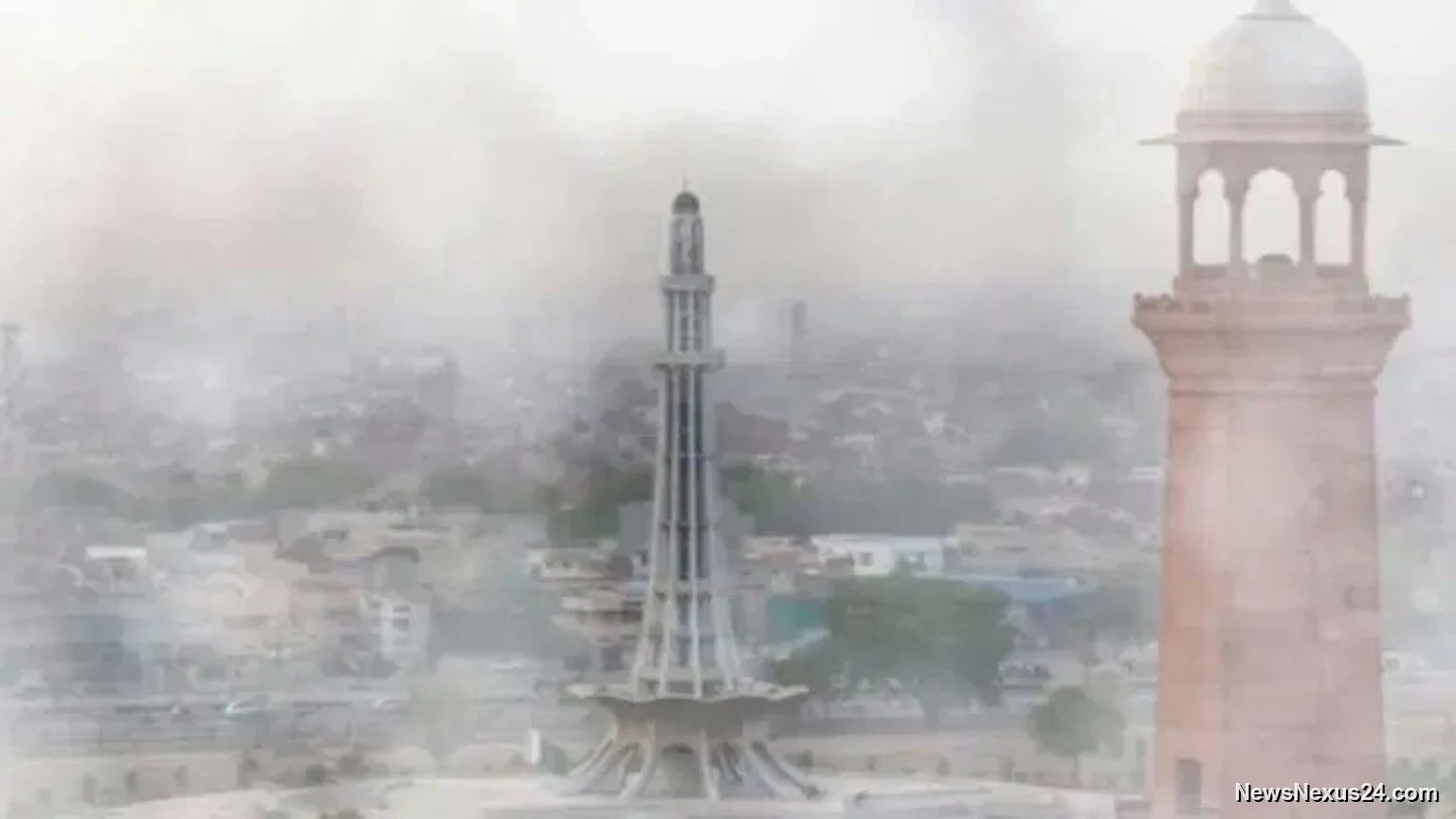
Punjab says smog is a public-health challenge as Lahore air worsens
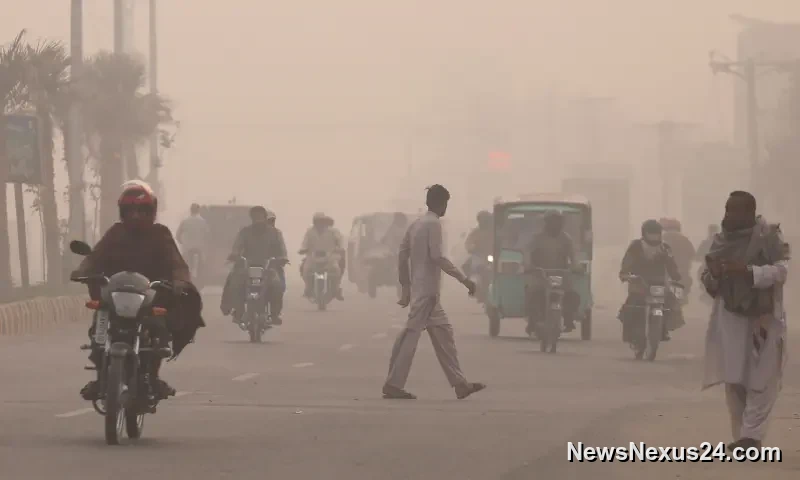
“Punjab has described smog as a public-health and environmental challenge as Lahore recorded an AQI of 358 and cities across the province remained under heavy pollution.”
Key points
- Punjab has described smog as a public-health and environmental challenge as Lahore recorded an AQI of 358 and cities across the province remained under heavy pollution.
- The provincial EPA said cross-border air contributed to worsening conditions, while local emissions and weather also played a role.
The Punjab government has described smog as a scientific, environmental and public-health challenge rather than a political issue, as Lahore, Multan and other cities remained under a dense layer of polluted air. Senior Minister Marriyum Aurangzeb said the issue affected the lives, health and future of millions of people.
Lahore recorded an air-quality index reading of 358 on Wednesday night, placing it at the top of a global ranking of major polluted cities. The continuing conditions also affected other areas of Punjab, where authorities have been monitoring pollution levels and weather patterns.
The Punjab Environment Protection Agency said its assessment for the Diwali period found that pollution-laden air from India had travelled deep into the province and contributed to higher particulate-matter concentrations. The agency said around half of Punjab was affected by air originating across the border during the preceding 24 hours.
According to the agency’s trajectory modelling, air released across the border on Diwali night could reach Lahore from Amritsar in about two hours, Faisalabad in 12 hours and Multan in roughly 11 hours. The assessment identified cross-border pollution as a significant contributing factor, while noting that local emissions and meteorological conditions also influence air quality.
Monitoring data showed different pollution levels across Lahore. The Wagah Border station recorded a 275 per cent increase in PM2.5 concentrations, with a peak between 3am and 4am, while the Safari Park station on the western side of the city recorded a 15 per cent increase.
The agency said this east-to-west variation was consistent with pollution being carried by easterly winds. Lahore’s overall AQI rose from 366 on November 8 to 440 on November 9, reaching its highest recorded level at 9am, according to the assessment.
The heavy smog also led to traffic disruption. Motorway sections were closed earlier in the week, including the Shamkot-to-Abdul Hakeem route for all traffic and the Sher Shah-Multan section towards Khanewal for heavy vehicles.
The provincial government said it had developed an integrated system for smog monitoring, forecasting, enforcement and response. Aurangzeb said the system used round-the-clock monitoring, technology-enabled surveillance and coordinated action across industry, transport, agriculture and brick kilns.
She said Punjab had introduced an air-quality forecasting system designed to identify pollution trends five to seven days in advance. The government also claimed that air-pollution indicators had improved in several areas, though the immediate conditions in Lahore and other cities remained hazardous.
Corrections & clarifications
Spot an inaccuracy or need more detail? Email connect@newsnexus24.com. Publication time is shown above.