
Why Pakistan can’t ignore Afghanistan-based militancy next door
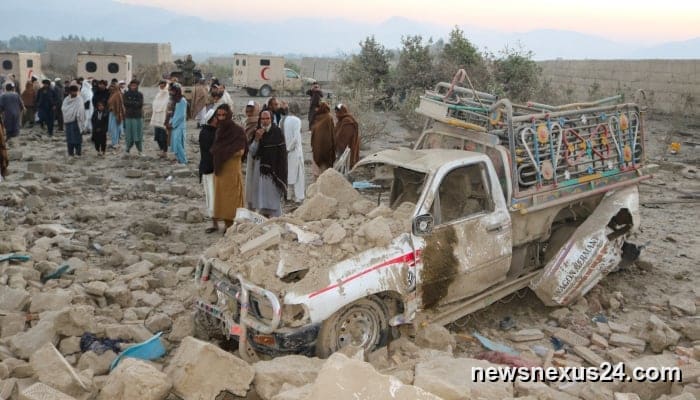
“A Geo.tv commentary argues Pakistan’s border security choices are shaped by proximity to militant sanctuaries in Afghanistan and rising domestic pressure after repeated attacks.”
Key points
- A Geo.tv commentary argues Pakistan’s border security choices are shaped by proximity to militant sanctuaries in Afghanistan and rising domestic pressure after repeated attacks.
- It says lasting stability would require verifiable action against cross-border militancy and stronger coordination mechanisms between Islamabad and Kabul.
Pakistan’s latest cross-border action has quickly been reduced to familiar labels such as “sovereignty violations” and “regional instability”, but that framing misses the core driver: Pakistan’s security exposure is immediate, continuous, and shaped by geography and a porous frontier.
Islamabad has long argued that anti-Pakistan militant groups—especially the TTP—have been able to regroup across the border, a claim Kabul has rejected. With repeated attacks producing real domestic pressure and civilian losses, Pakistan’s calculus increasingly shifts from patience to signalling that tolerance thresholds have been crossed.
At the same time, military force alone is unlikely to dismantle sanctuary dynamics. Networks that straddle borders draw strength from difficult terrain, local alliances, and ideological overlap. Afghan authorities also face constraints: taking on groups tied to shared histories and loyalties can risk internal fractures inside an order still consolidating after decades of conflict.
Pakistan’s decision-making, however, is driven less by Kabul’s internal challenges and more by the urgency of its own exposure. The Durand Line functions not only as a boundary but as a corridor where trade, kinship, and militancy have moved for years. Expecting indefinite restraint after repeated attacks ignores how states prioritise internal stability.
The approach carries risks. If cross-border action becomes routine without lasting outcomes, it can narrow diplomatic space and deepen mistrust—creating openings for militant actors to exploit poor coordination between the two sides.
A more durable path would require intelligence sharing, verifiable commitments, and a shared understanding that groups attacking one neighbour cannot be treated as a secondary issue by the other. Without credible, measurable steps to curb cross-border militancy, episodic military measures are likely to recur because, for Pakistan, proximity compresses reaction time and raises the cost of passivity.
Corrections & clarifications
Spot an inaccuracy or need more detail? Email connect@newsnexus24.com. Significant updates are timestamped above.


