
Why Pakistan’s economy can’t grow without investing in nature
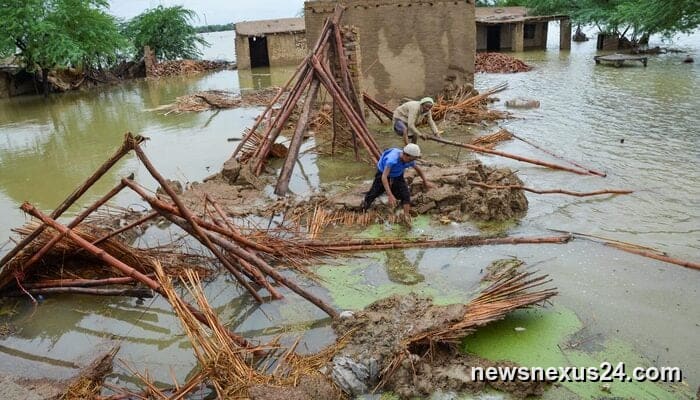
“A Geo.tv analysis argues Pakistan should treat forests, wetlands and watersheds as economic infrastructure, not side issues.”
Key points
- A Geo.tv analysis argues Pakistan should treat forests, wetlands and watersheds as economic infrastructure, not side issues.
- It urges biodiversity financing tools and policy reforms to protect ecosystem services that underpin growth, water security and disaster resilience.
In Pakistan’s recurring discussions on recovery, austerity and climate exposure, one productive asset is still routinely sidelined: nature. Forests, wetlands, soils, rangelands and coastal ecosystems are often treated as peripheral environmental issues rather than core economic infrastructure.
Yet these systems sustain farm output, stabilise water supplies, reduce disaster losses and support millions of livelihoods. For a country as climate-exposed as Pakistan, biodiversity is not a luxury item — it is an essential input into macroeconomic stability. The central policy question is how to fund ecosystems as strategic national assets, not merely as conservation projects.
Biodiversity financing refers to deliberately mobilising public, private and international capital to protect and manage ecosystems in ways that also produce measurable economic value. Unlike many donor-led conservation efforts that remain small and short-term, this approach integrates natural capital into fiscal policy, development planning and the financial system.
Pakistan’s dependence on ecosystem services is visible in its economic structure. With GDP estimated around $340 billion in FY2024–25, the country remains heavily tied to sectors that are sensitive to climate and natural resources. Agriculture alone contributes roughly a quarter of GDP, employs more than a third of the workforce, and anchors export industries such as textiles, rice and leather.
These value chains rely on fertile soil, predictable water flows, pollination and local climate regulation. When these services weaken, yields drop, supply chains become volatile and inflation pressures grow — turning environmental damage into a macroeconomic risk.
The Indus Basin irrigation network highlights this interdependence. Its performance is influenced by upstream forests that moderate runoff, wetlands that absorb surges, and stable glacial cycles that sustain river discharge. Deforestation and land degradation raise sediment loads, increase variability in water availability and drive up the cost of maintaining infrastructure.
The economic impact of ecosystem collapse is not theoretical. The 2022 floods caused damages and losses exceeding $30 billion, disrupting agricultural activity, widening fiscal pressures and pushing down the country’s growth path. The lesson is clear: repairing built infrastructure after disasters can be far more expensive than maintaining the natural systems that reduce catastrophe risk.
International thinking has gradually shifted toward treating nature as an economic asset instead of a constraint on growth. Global development frameworks repeatedly emphasise that poverty reduction, food security and climate adaptation are unattainable without healthy ecosystems.
Several developing countries provide useful signals for what is possible. Costa Rica scaled forest restoration through Payments for Ecosystem Services funded by environmental levies, supporting regeneration while helping build a strong ecotourism sector. Bangladesh’s work to revive coastal mangroves shows how nature-based measures can function as storm barriers, reducing cyclone damage and protecting farm productivity.
For Pakistan, similar logic implies that nature-based investment should be understood as fiscally sensible development policy. However, public budgets alone cannot cover the scale of restoration required for degraded landscapes, watersheds and coastal zones. That reality makes innovative finance tools essential.
Green and blue bonds can attract long-term institutional funding for projects such as reforestation, modernised irrigation and marine ecosystem restoration. Blended finance structures — combining concessional money with private capital — can lower perceived risk and help develop markets in climate-smart agriculture and sustainable forestry. Payments for Ecosystem Services can also create incentives for upstream communities to protect water sources that support downstream cities and industries.
Large international funding channels already exist, including major windows under the Global Environment Facility and the Green Climate Fund. But tapping these pools requires credible project pipelines, strong environmental data and coordinated institutions — areas where Pakistan needs to strengthen governance and technical capacity.
Equally important is bringing biodiversity into domestic economic policy. Three shifts stand out. First, Pakistan should develop natural capital accounts that quantify how ecosystem services contribute to national income and how degradation reduces national wealth. With such metrics, policymakers can weigh short-term exploitation against long-run economic resilience.
Second, subsidies that unintentionally encourage wasteful water use or unsustainable farming should be gradually redirected toward regenerative agriculture, watershed recovery and efficient irrigation technologies. This can improve productivity while reducing long-term fiscal stress.
Third, financial regulators can require stronger assessment of environmental risk, encouraging banks to consider climate and biodiversity exposure in their lending decisions. Over time, this steers capital toward resilient activities and lowers systemic vulnerability to environmental shocks.
Pakistan does not necessarily need entirely new institutions to act. What is required is alignment among federal economic agencies, provinces that manage land and natural resources, financial institutions capable of structuring sustainability-linked instruments, and research bodies that can generate reliable valuation data.
If these actors move in sync, fragmented environmental efforts can become a national investment strategy. Treating biodiversity as a cost misses the broader economic reality: Pakistan’s growth model — anchored in agriculture, water security and climate-sensitive infrastructure — cannot endure without investing in the ecosystems that make it possible.
Nature is not outside the economy; it is one of the economy’s most fundamental inputs. The policy choice is straightforward: continue treating biodiversity as an expense, or recognise it as infrastructure that underpins sustainable growth. In an era of fiscal constraint and rising climate risk, investing in natural capital may be among the most economically rational decisions Pakistan can make to secure long-term stability and resilience.
Corrections & clarifications
Spot an inaccuracy or need more detail? Email connect@newsnexus24.com. Significant updates are timestamped above.


