
Pakistan economy on track, aims for sustainable stability: Aurangzeb
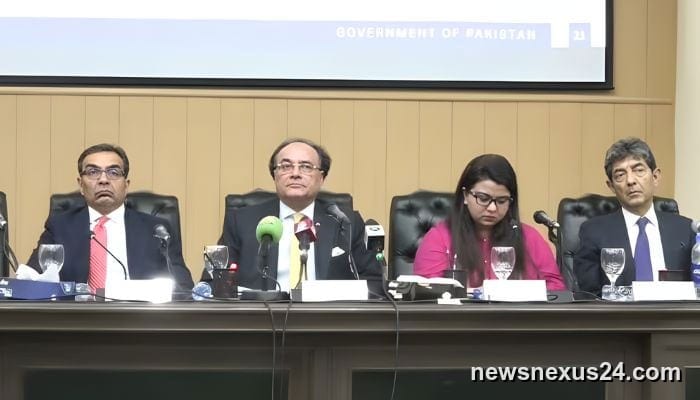
“Pakistan's finance team said reforms are yielding stability and validating an IMF-backed recovery path.”
Key points
- Pakistan's finance team said reforms are yielding stability and validating an IMF-backed recovery path.
- Tax broadening, energy sector fixes, privatisation and a cashless push headline the agenda, with no immediate plan for new taxes.
ISLAMABAD: Finance Minister Muhammad Aurangzeb said Pakistan's economy is heading in the right direction, pointing to visible improvements across key sectors and the government's recent staff-level agreement with the IMF as validation of its policy path.
He stressed that the government's main objective is durable, long-term stability anchored in structural reforms across taxation, energy and other areas. The minister also cited pension reform and right-sizing of the public sector among ongoing priorities, and noted that three global ratings agencies have acknowledged macroeconomic stabilisation. He thanked partners in the GCC, China and the United States for support.
Federal Board of Revenue (FBR) Chairman Rashid Langrial said the tax-to-GDP ratio had risen by 1.5 percentage points, with the number of return filers up to 5.9 million and an 18% year-on-year jump in filings. He added there was no immediate plan to impose new taxes, with emphasis instead on compliance and broadening the base to reach an 18% tax-to-GDP ratio in the coming years.
Energy Minister Awais Leghari said electricity prices had been reduced by as much as 10.5% over the past 18 months and EV tariffs cut, while efforts to curb circular debt included a major financing arrangement. He announced a shift toward automated, prepaid metering at scale and said the government will stop purchasing electricity directly as the market reforms deepen.
Adviser on Privatisation Muhammad Ali said transactions would accelerate with greater transparency and capacity at the Privatisation Commission, citing the sale of First Women Bank and ongoing work to complete PIA's privatisation with four qualified consortiums. He said distribution companies' privatisation had started with IESCO, LESCO and FESCO.
Coordinator to the PM for Right-Sizing Salman Ahmad said 20 ministries had undergone restructuring and 54,000 vacant posts were abolished, while loss-making entities such as PASSCO would be wound up to protect taxpayers.
IT Minister Shaza Fatima outlined the government's push toward a cashless economy under the Digital Nation Pakistan roadmap, saying the Raast payment system and a common digital exchange layer would harmonise data across state institutions and make concealment of transactions harder.
Corrections & clarifications
Spot an inaccuracy or need more detail? Email connect@newsnexus24.com. Significant updates are timestamped above.


